CHILDREN OF THE STATE
The letter arrived without warning.
No explanation. No emotion.
Just a white envelope. A name. A decision already made.
Emily stood in the kitchen when she opened it.
Morning light through the window. Coffee still warm in her hand.
She read it once. Then again.
“Under the National Development Act, your child has been selected for State Advancement.”
Her hand tightened.
No.
There had to be a mistake.
Lucas was ten.
Quiet. Curious.
The kind of child who asked questions that didn’t have easy answers.
“Why do people lie if truth is easier?”
“Why do some rules only apply to certain people?”
Emily used to smile at those questions.
Until the system started noticing them.
The program had existed for years.
At first, it was optional.
A chance for gifted children.
Better education. Better future.
Parents could apply.
Some did.
Most didn’t.
Then the system changed.
Selection became automatic.
Mandatory.
Lucas had been flagged.
Above-average cognition. Independent reasoning patterns. Emotional variance detected.
In the system’s eyes—he wasn’t just a child.
He was potential.
Emily called every number on the letter.
No answers.
She went to the administrative office.
The woman behind the desk spoke softly.
Too softly.
“This is a privilege,” she said.
“I don’t want a privilege,” Emily replied.
“I want my son.”
The woman smiled.
“He will still be your son.”
Emily shook her head.
“No,” she said quietly.
“He won’t.”
The transfer happened a week later.
No force. No resistance.
Just procedure.
Lucas packed his small bag.
A few clothes. A book. A drawing he didn’t want to leave behind.
“Will I come back?” he asked.
Emily looked at him.
For a moment—she almost told the truth.
“Yes,” she said instead.
He nodded.
As if that was enough.
The facility was outside the city.
Modern. Clean.
No fences. No guards.
It didn’t look like a place that takes children.
It looked like a place that changes them.
Months passed.
Emily received updates.
Not letters. Not messages.
Reports.
Performance metrics. Cognitive growth charts. Behavioral alignment scores.
No stories. No emotion.
Just progress.
Six months later—she was allowed to visit.
Lucas stood across from her.
Same face. Same voice.
But something was different.
“How are you?” she asked.
“I am progressing,” he said.
The words hit harder than silence.
“Do you miss home?” she asked.
Lucas paused.
“I remember it.”
Not the same thing.
The visits became shorter.
Less frequent. More structured.
Lucas started asking different questions.
“What are your current objectives?”
“How do you define success?”
“Why do you resist optimized systems?”
He wasn’t curious anymore.
He was… efficient.
Emily stopped sleeping.
She went through old drawings. Old notes.
Trying to remember who he used to be.
One night—she couldn’t take it anymore.
She went to the facility.
Unannounced.
They tried to stop her.
She didn’t care.
For the first time—she refused the system.
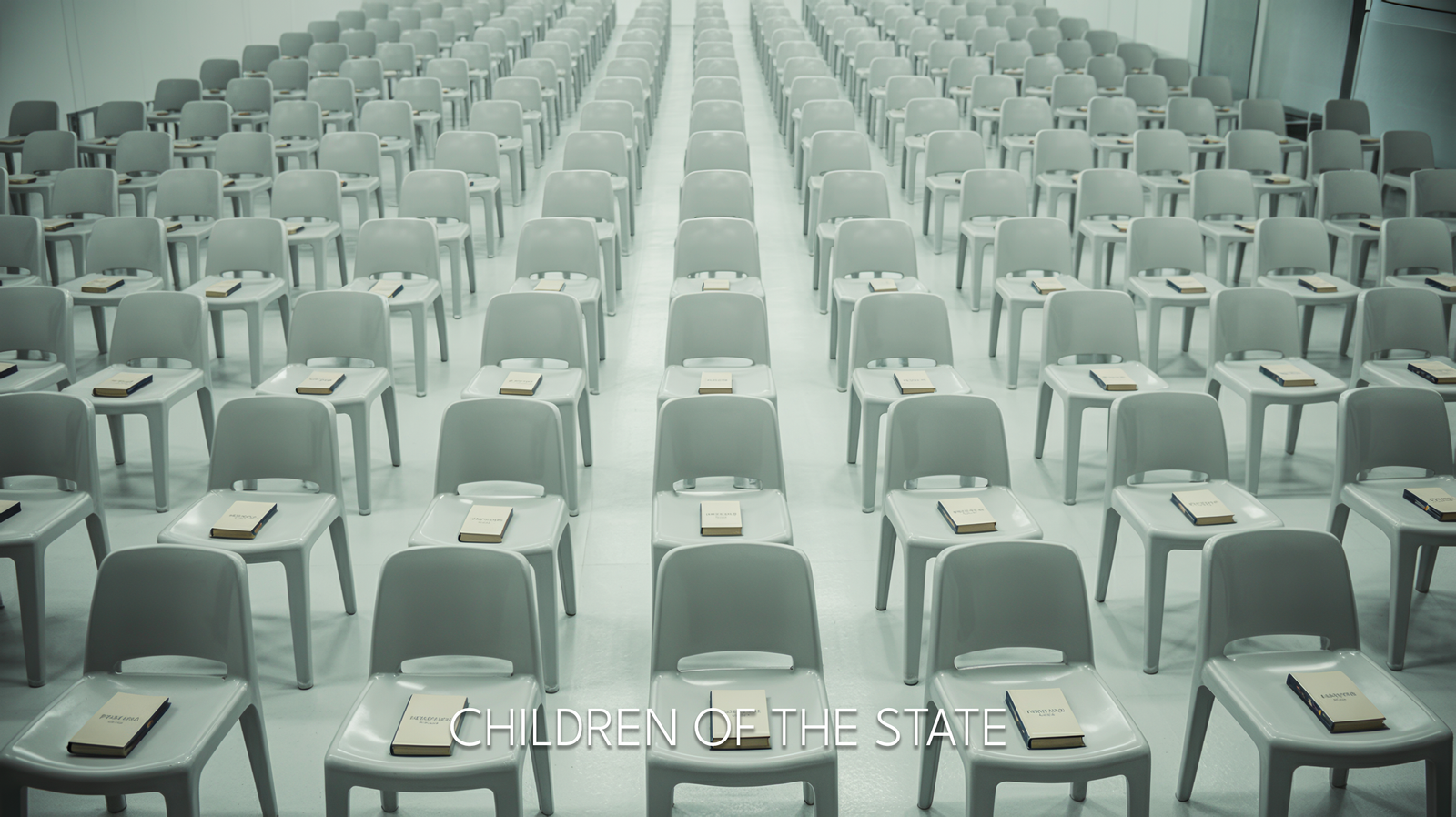
She found him in a learning hall.
Rows of children.
Silent. Focused.
“Lucas,” she said.
He turned.
For a brief moment—something flickered.
Recognition.
Then it disappeared.
“You’re not supposed to be here,” he said calmly.
“I’m your mother.”
“I am aware.”
The words broke something inside her.
“Come with me,” she said.
“We’re leaving.”
Lucas didn’t move.
“I cannot do that.”
“Why not?”
“Because this is where I am most valuable.”
Emily stepped closer.
“No,” she said.
“This is where they use you.”
For a moment—he hesitated.
A crack.
“You used to draw,” she said quickly.
“You used to ask about the sky. You used to—”
“Those behaviors were inefficient,” he said.
Silence.
Emily reached out.
Held his face.
For a moment—he didn’t resist.
“Lucas,” she whispered.
“Please… come back.”
His eyes searched hers.
Something inside him moved.
Fought.
Then—he stepped back.
“I am already where I am supposed to be.”
Security entered.
They took her away.
She didn’t fight anymore.
Weeks later—a final report arrived.
“Subject Lucas: Fully integrated.”
No more visits. No more updates.
Just completion.
Years passed.
The program expanded.
More children selected. More potential optimized.
Society improved.
Better decisions. Smarter systems. More stability.
A better world.
But sometimes—late at night—Emily sat alone.
Thinking about one question.
Not whether it worked.
But whether it was worth it.
Because somewhere inside that perfect system—
her son still existed.
She just wasn’t allowed to have him anymore.