LAW OF HAPPINESS
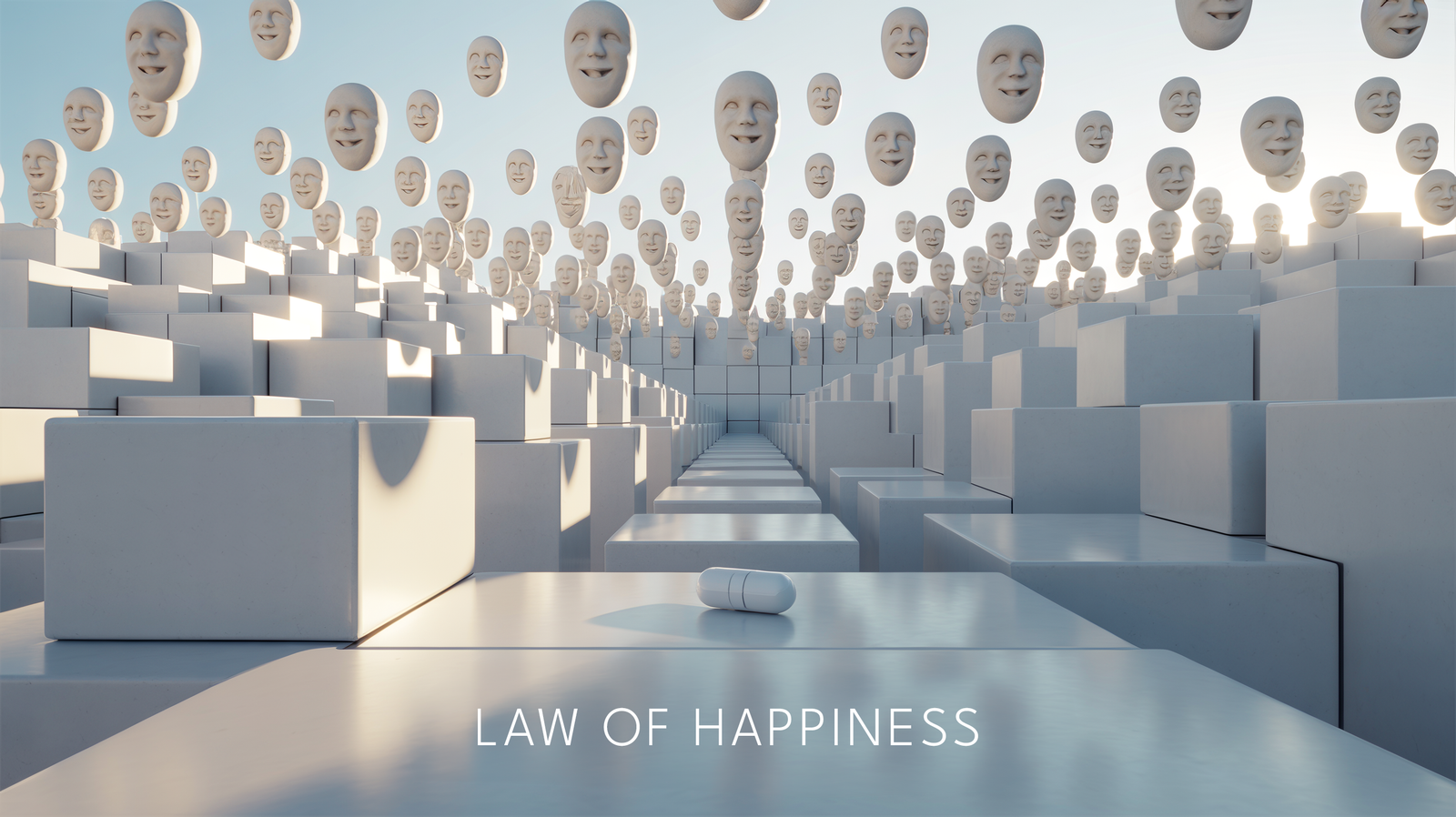
They didn’t ban sadness in a single moment. That would have been too obvious. Too violent.
Instead, they made happiness easier. It started as a recommendation.
After years of rising depression, anxiety, and public unrest, the government introduced a program called Project Balance. Its goal sounded reasonable.
Stabilize emotional extremes. Reduce suffering. Create a healthier society.
The solution was simple. A pill. Small. White. Called Serena.
At first, it was prescribed.
People with anxiety took it. People with grief took it. People who couldn’t sleep, couldn’t focus, couldn’t cope— they took it.
And it worked. Crime dropped. Arguments decreased. Hospitals reported fewer psychiatric emergencies.
The country felt… calmer.
Jenna Porter didn’t trust it.
She was a painter.
Which meant she depended on things most people tried to avoid.
Emotion. Instability. Feeling too much.
Her friends told her she was overthinking. “It’s just medicine,” they said. “It helps people.”
She didn’t argue. But she noticed things. Small changes.
People laughed less loudly. Smiled more softly.
At a café, conversations felt… controlled. Like everyone was choosing their words too carefully.
Even grief changed. At a funeral she attended, no one cried. They stood quietly. Composed. Almost peaceful.
It felt wrong.
Two years later, Serena was no longer optional. The government passed the Emotional Stability Act. The explanation was simple.
Emotional instability leads to conflict. Conflict leads to suffering. A stable society requires stable minds.
Every citizen received a daily dose. Refusal triggered evaluation. Evaluation led to correction. Most people accepted it. Why wouldn’t they?
Life became easier. Smoother. Quieter.
Jenna stopped taking it. At first, she just hid the pills.
Then she threw them away.
Within days, the world changed. Not externally. Internally.
Colors felt sharper. Music felt deeper. But so did everything else.
Sadness returned. Anger returned. Fear returned. She felt alive again.
It didn’t take long for the system to notice. One morning, she received a message.
“Emotional irregularity detected. Mandatory evaluation scheduled.”
The building looked like a clinic. Soft lighting. Warm colors. Calm voices. Everything designed to make you feel… safe.
A man in a grey suit sat across from her.
“Jenna,” he said gently.
“We’ve noticed fluctuations in your emotional patterns.”
“I feel fine,” she replied.
He smiled. “Of course you do.”
He showed her a screen.
Graphs. Data. Her heart rate. Her sleep cycles. Her stress indicators.
“Your emotional state is unstable,” he said.
“Or maybe it’s human,” Jenna replied.
The man’s expression didn’t change.
“Human suffering is exactly what this system prevents.”
They increased her dosage. Recommended immediate compliance.
That night, Jenna walked through the city.
Everything looked perfect. People moved calmly. Spoke softly. Smiled politely. No arguments. No tension. No visible pain.
It looked like peace.
But it felt like something had been removed.
In a park, she watched a child fall. The child stood up. Looked at their scraped knee. And didn’t cry.
Jenna felt something tighten in her chest. Not because of the child. Because of what didn’t happen.
Back home, she stared at the pill in her hand.
One small decision.
Take it—and everything becomes easier again. Smoother. Safer.
Or don’t. And feel everything. Even the parts that hurt.
She opened her window. The city lights glowed quietly below.
Then she dropped the pill into the trash.
Days passed. More notifications. More warnings. Subtle restrictions.
Her work stopped getting attention.
Her access slowed.
Her visibility decreased.
The system didn’t punish her.
It isolated her.
Until one night—
she heard something.
From another apartment.
A sound.
Familiar.
Rare.
Crying.
Jenna stood still.
Listened.
Because in a country where sadness had been removed—
that sound meant only one thing.
She wasn’t the only one who refused.
And maybe—
that was the beginning of something.
Not chaos.
Not instability.
Something real.
Because without sadness—
happiness wasn’t happiness.
It was just silence.