THE MEMORY ERASER
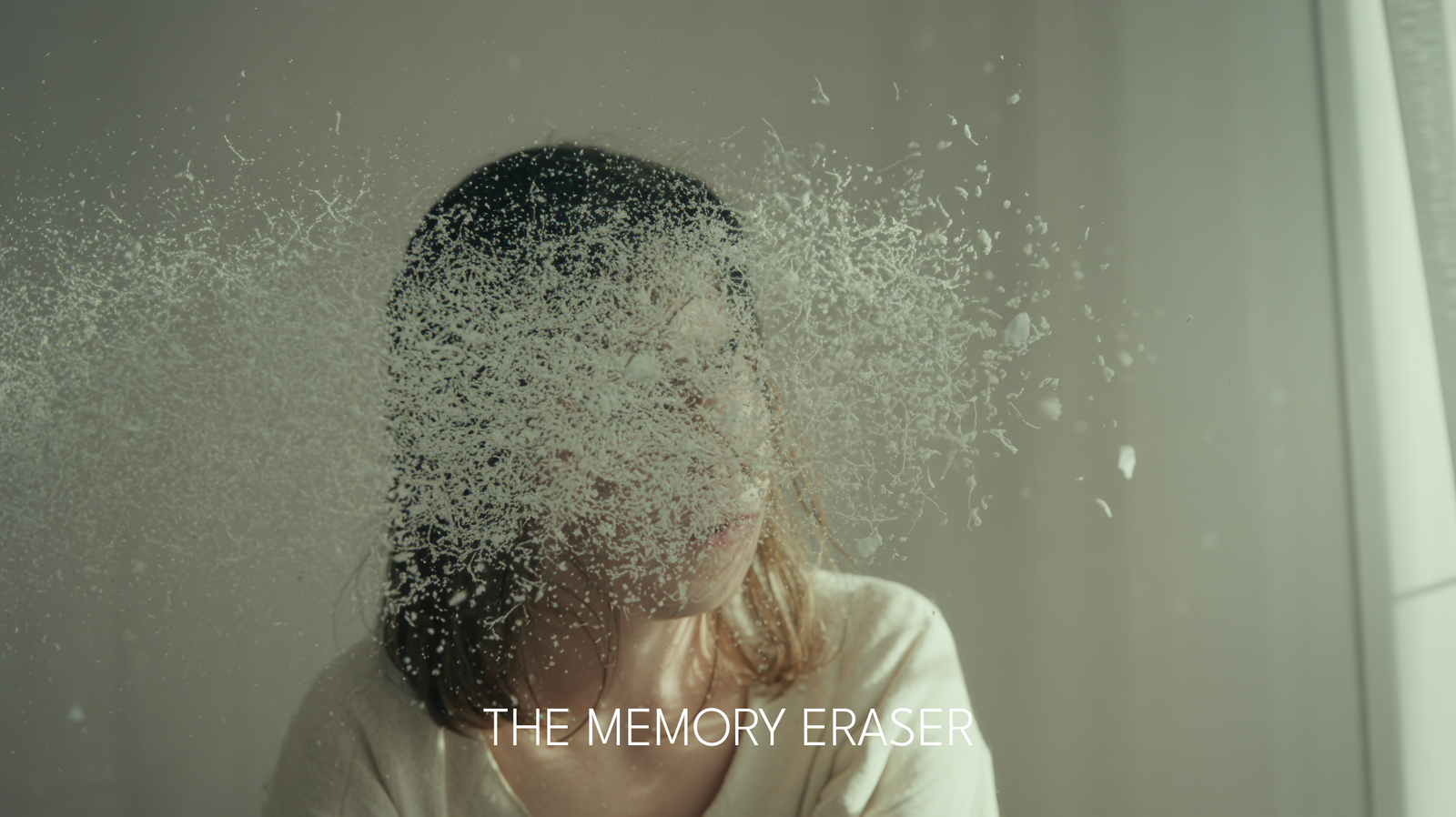
Jason didn’t want to forget.
He just didn’t want to feel it anymore.
The accident lived inside him—not as a memory, but as a loop.
Rain against the windshield. The flash of headlights. The sound that came after.
His sister laughing seconds before it happened.
Then—nothing.
And everything.
He survived.
She didn’t.
People told him time would help.
It didn’t.
Time didn’t heal the memory.
It sharpened it.
The more he tried to move on—the clearer it became.
Therapy helped him understand it.
Medication dulled it.
Distraction delayed it.
But nothing removed it.
Then he heard about ClearMind.
A clinic that didn’t treat pain.
It removed it.
The concept sounded impossible.
Too clean. Too simple.
Selective memory removal.
Not everything.
Just the parts you couldn’t live with.
People talked about it carefully.
Like it was something fragile—or dangerous.
But the testimonials were clear.
“I can sleep again.”
“I feel free.”
“I’m finally okay.”
Jason waited three months.
Three months of the same night—over and over again.
Then he booked the appointment.
The clinic was quiet.
Soft light. Neutral colors.
Everything designed to make decisions feel easier.
A woman sat across from him.
“What would you like to remove?” she asked.
Jason didn’t hesitate.
“The accident.”
She nodded.
“Do you understand what that means?”
“It means I won’t remember it.”
She looked at him carefully.
“It means more than that.”
She explained.
Memories weren’t isolated.
They were connected.
Remove one—and others shift.
Weaken. Change. Disappear.
“Your relationship with your sister may feel different,” she said.
Jason stared at her.
“She’s already gone.”
The procedure took less than an hour.
No pain. No fear.
Just… silence.
When Jason woke up—the weight was gone.
The tension in his chest.
The tightness in his thoughts.
All of it—gone.
“Do you remember why you came here?” the doctor asked.
Jason thought.
“I was struggling with something,” he said slowly.
“But I can’t remember what.”
She nodded.
“That’s expected.”
For the first time in months—he smiled.
The days that followed felt lighter.
He slept. He laughed.
He moved through life without resistance.
People noticed.
“You seem better,” they said.
And he believed them.
Until small things began to feel… wrong.
He found a photo.
Him—and a girl.
Arms around each other. Laughing.
He stared at it.
Trying to remember.
Nothing.
He checked the name.
Megan.
His sister.
His chest tightened.
But not with grief.
With confusion.
He went through more photos.
Birthdays. Conversations. Moments.
All of them felt distant.
Like someone else’s life.
He knew she mattered.
He just couldn’t feel why.
The next week, he visited his parents.
His mother hugged him too tightly.
“I’m glad you’re doing better,” she said.
“I think I am,” he replied.
She pulled back.
Looked at him.
“Do you remember her?”
Jason hesitated.
“I know she existed.”
His mother’s expression broke.
“That’s not what I asked.”
Silence.
That night, Jason sat alone.
Scrolling through old messages. Voice notes. Videos.
In one video—his sister laughed.
The same laugh from the night of the accident.
He played it again.
And again.
Waiting.
For something to come back.
Nothing did.
The next day—he returned to ClearMind.
“I want it back,” he said.
The doctor didn’t look surprised.
“That’s not possible.”
“Why not?”
“Because we didn’t erase the memory,” she said.
“We rewrote your brain around it.”
Jason felt something shift.
Not pain.
Not yet.
Fear.
“You removed the worst moment of your life,” she continued.
“But that moment was connected to everything else.”
She paused.
“Love. Grief. Identity.”
“They’re not separate.”
Jason sat in silence.
“So what do I do now?” he asked.
The answer came quietly.
“Live with what’s left.”
That night, he sat in the dark.
Thinking.
Feeling—less.
He realized something slowly.
He hadn’t removed pain.
He had removed depth.
Meaning.
The reason his sister mattered.
Tears formed in his eyes.
But they felt empty.
Like his body remembered how to cry—
but not why.
Months later, ClearMind expanded.
More clients. More success.
Because people didn’t want suffering.
They wanted relief.
Even if it meant losing parts of themselves.
Jason still had the photos.
The videos.
The life he once felt.
But now—it was just information.
Not memory.
And somewhere inside him—he understood the truth.
The pain wasn’t the problem.
It was proof.
That something mattered.
And once you remove that—
you don’t just erase suffering.
You erase meaning.