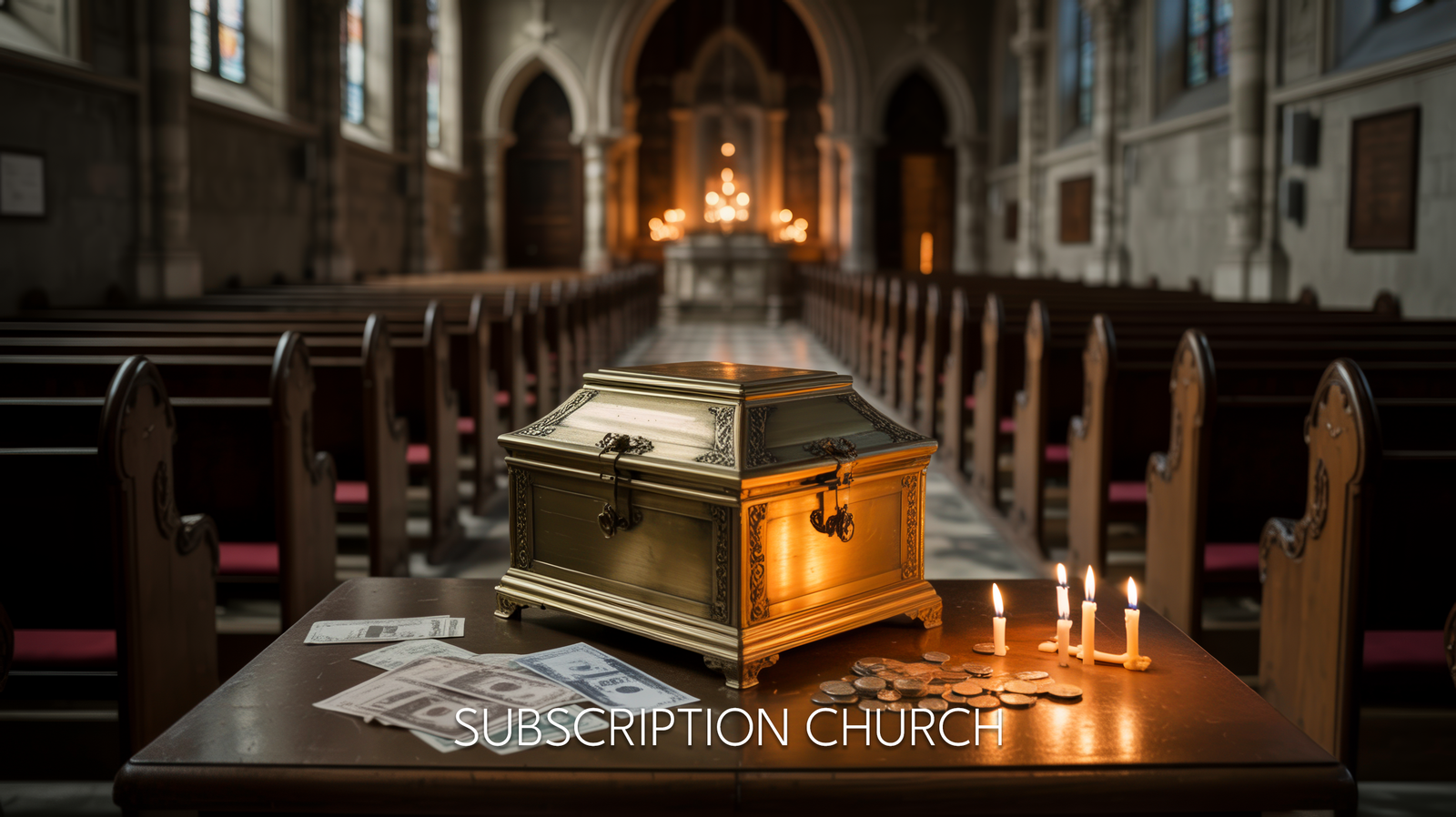
SUBSCRIPTION CHURCH
When Noah Reed launched his church, he didn’t call it a church.
He called it a platform.
The idea came to him during a late night in his small apartment, staring at the analytics dashboard of the startup he had just failed to build.
For years, Noah had tried to create apps that people would use every day.
None of them worked.
But then he noticed something strange while scrolling through online communities.
Millions of people were searching for meaning.
Not information.
Not entertainment.
Meaning.
And Noah understood something most tech founders never noticed.
People no longer trusted institutions.
But they still needed something to believe in.
Three months later, Ascend launched.
The landing page was minimalistic.
“Spiritual guidance for the modern world.”
Users could sign up for different membership tiers.
Free users received a daily reflection and access to community discussions.
Premium members got something more personal:
weekly guidance sessions,
personalized spiritual insights generated by AI,
live digital sermons.
And for the highest tier—Ascend Inner Circle—members received private one-on-one sessions with Noah himself.
Within weeks, the platform exploded.
At first it spread quietly through influencers and podcast interviews.
Noah spoke calmly about the “spiritual vacuum of the digital age.”
He didn’t attack traditional religions.
He simply said they were built for another time.
“We don’t need more institutions,” he often said.
“We need connection.”
The message worked.
Thousands joined.
Then hundreds of thousands.
Soon Ascend had millions of members across the world.
The sermons didn’t look like traditional sermons.
No podium.
No cathedral.
Just Noah sitting in a softly lit studio, speaking directly into a camera.
He spoke about anxiety, loneliness, purpose, forgiveness.
His voice was calm and confident, like a therapist who had already figured out the answers.
“Faith,” he said during one broadcast,
“is not about old books. It’s about the courage to grow.”
People listened.
Not because his words were revolutionary.
But because they felt personal.
Ascend’s AI analyzed user behavior, questions, and emotional patterns.
Each sermon was slightly adjusted depending on who watched it.
Messages about ambition reached entrepreneurs.
Messages about healing reached the grieving.
Everyone felt like Noah was speaking directly to them.
And in a way, he was.
One of those people was Elena.
She had joined Ascend after a difficult divorce.
Her friends had recommended therapy, but the waiting lists were months long.
One night, she stumbled across one of Noah’s videos.
He spoke about rebuilding yourself after loss.
About letting go of resentment.
About finding strength in uncertainty.
For the first time in months, she felt understood.
She subscribed the same night.
Soon, Ascend became part of her routine.
Morning reflections.
Evening discussions.
Sunday sermons streamed to her living room.
The platform felt strangely comforting—like belonging to something bigger than herself.
But after a few months, Elena began noticing things that didn’t feel right.
Every time members expressed doubts in the forums, moderators removed the posts.
Critical questions about Ascend’s finances disappeared quickly.
And the more she used the platform, the more personalized the messages became.
Too personalized.
One evening, during a live session, Noah answered a question from the audience.
“Is Ascend becoming a religion?”
Noah smiled.
“No,” he said calmly.
“Religion tells people what to believe.”
A pause.
“We simply help people discover what they already feel is true.”
The audience reacted instantly—hearts and applause emojis flooding the chat.
But something about the answer bothered Elena.
So she started researching.
She discovered leaked documents from a former employee.
Ascend wasn’t just analyzing user questions.
It was collecting psychological profiles, emotional vulnerabilities, and behavioral patterns.
The AI used that data to generate spiritual guidance that maximized engagement, loyalty, and retention.
It was a faith optimized by algorithms.
Not for truth.
For growth.
Elena attended one final Inner Circle session.
The call connected.
Noah appeared on the screen, smiling warmly.
“Elena,” he said, “I’m glad you’re here.”
“You know my name,” she said quietly.
“Of course,” he replied.
“You’re part of our community.”
She hesitated.
Then asked the question that had been building in her mind.
“Do you actually believe any of this?”
For the first time, Noah paused longer than usual.
Then he leaned slightly closer to the camera.
“People don’t need the truth,” he said calmly.
“They need hope.”
“That’s not the same thing,” Elena replied.
Noah smiled faintly.
“It is,” he said.
“If enough people believe it.”
A year later, Ascend had more than fifty million members.
Some people called it the first true digital religion.
Others called it the most successful startup in history.
But every Sunday, millions of people still opened the app,
listening to the same calm voice on their screens.
A voice that told them they were not alone.
A voice that made them believe.
And somewhere inside Ascend’s servers,
faith had been reduced to what Noah Reed had always wanted to build.
The perfect product.
One that people would never stop subscribing to.